Greeting

Welcome to Dan's Daily Dig, a personal journey to dig into the Bible one chapter a day and grow spiritually. The goal is to read and reflect on each chapter using the following four questions:

1. What stood out to me from this chapter?

2. How does this relate to any other Scripture I know?
3. What does this mean for my life?
4. What questions do I have about this passage?

This blog is intended to provide both accountability for me to keep pressing on in this quest, and an invitation for any reader to join me any day or everyday. Simply read the selected chapter (it only takes about 5 minutes), and then respond using any or all of the four questions. It's supposed to be simple, but I hope to learn from others as well. I plan to share the blog as well on my twitter feed daily, so follow @DanBoji if you want to get the alert to the blog's posting. You can also subscribe by e-mail or another RSS feed on the right side of the screen. God's blessings.

In Christ,
Dan
Showing posts with label commandment. Show all posts

Sunday, March 1, 2015

#Mark12 - Tax Season For Jesus Too

Click here to read Mark 12:

1. What stood out to me from this chapter?

Two different parts of this chapter deal specifically with money. The first is about paying taxes. The Jews hated the Romans and the oppression brought on by empire. Even though they enjoyed some religious freedoms, they still had hopes that the Messiah would come and rescue them from the Romans and their other enemies. So when the leaders ask this question about taxes, they are either hoping that Jesus will say, "Yes, you should pay taxes to Caesar," at which point he would lose favor with the people, or "Give your money to God instead of Caesar," at which point the Roman guards would arrest him and deal with him as an insurrectionist trying to rebel against the Emperor. The answer Jesus gives is not just a way to dodge a tough situation. Instead he addresses it very truthfully, biblically, and practically that nobody could argue.

2. How does this passage relate to any other Scripture I know?

The parable of the tenants has always been striking to me ever since I understood the meaning of it all. The political leaders, religious leaders and teachers of the law are the tenants that God has placed on earth to "take care of the church." And the prophets are the messengers he has sent. But almost none of the prophets were taken seriously, and many were beaten, mocked, and or hanged. When that "didn't work" he sent his Son. But just like they mistreated the prophets, they mistreated the Son too. This reminds me of Hebrews 1:1-2, "In the past God spoke to our ancestors through the prophets at many times and in various ways, but in these last days he has spoken to us by his Son..."

3. What does this mean for my life?

I am humbled when I read the story of the Widow's Offering. It is so special. I just picture Jesus hanging out, seeing what he saw, and jumping to get his disciples, "Look! Look! Come see this!" Jesus was not resentful or negative about all the other gifts, but he recognized that though the others were giving large sums of money, the woman's offering was the largest. I need to remember that I should be giving not just what is easily planned, but regular offerings with some of it being sacrificial in some way.

4. What questions do I have about this passage?

Does Jesus negate the possibility of recognizing loved ones in heaven? I don't think so, but he is definitely saying that things will be different and we won't have need for formal marriage relationships then.

Those are my thoughts. I'd love to hear yours. Until then, keep digging in.

In Christ,
Dan

image from http://i2.cdn.turner.com/money/2012/04/26/markets/h-and-r-block-stock/hr-block.gi.top.jpg

Tuesday, February 3, 2015

#Matthew22 - Three Round KO With Jesus

Click here to read Matthew 22:

1. What stood out to me from this chapter?

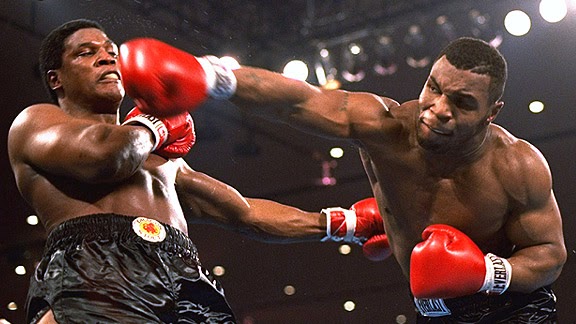
This whole chapter is sort of a standoff between the teachers of the law and Jesus. After Jesus shares the parable of the wedding banquet, there are three different groups of religious and civic leaders who come to Jesus trying to trap him in his words. Each time Jesus answers in such a way that the leaders are silenced. They can't argue or debate with him because he has actually not only answered the deeper meaning of the question, but in doing so pointed out their error and flaws of logic and heart. After the three questions, Jesus takes his turn to ask one. This question is kind of like a knock-out punch in a boxing match. In fact, the way Jesus answers their questions is not as much like a boxer trying to dodge or deflect, it's more like Neo in the first Matrix movie when he stops the bullets and sees the agents for what they truly are. Still, even though Jesus delivers a knock-out punch to their tricky questions, I don't think his intention was to shame and humiliate. I think it was to wake them up. He was very harsh with the religious leaders, but not to destroy them. Only to get through to their hard hearts that they too would have a chance to repent and be born again (just like Nicodemus, with whom Jesus spoke very gently).

2. How does this passage relate to any other Scripture I know?

Well the parable of the wedding banquet follows immediately after the parables from yesterdays reading in Matthew 21. They all share a similar message. The father asks one son to do a job and he doesn't do it. The landowner hires an initial group of people to manage the vineyard and give him dues. The king invites an initial group of people to the wedding banquet. In each scenario, I think Jesus is referring to the nation of Israel at large, specifically those who call themselves religious leaders. They rejected the prophets, actually neglected God at times, and ultimately killed the Son of God. Jesus is saying that God's patience doesn't last forever, and he is already alluding to the fact that God is now "allowing" Gentiles to become a part of the kingdom and family of God through faith in Christ. The Gentiles and "sinners" were always seen as outsiders of the blessings of God, but in each of these stories, Jesus is saying that those Gentiles and "sinners" who are hungry and eager to receive the blessings of God will be welcomed while those heart-hearted among the Jews will be cast out. Paul also teaches this way using the illustration of natural branches vs. grafted branches on a tree in Romans 11:11-24

3. What does this mean for my life?

I don't know if this was intended to be a Christian finance 101 class with the question of paying taxes, but Jesus' answer helps me to think through my personal finances. There is a pretty common question among Christians of whether we are supposed to give or "tithe" a percentage of our gross income (before taxes are taken out) or net income (what we take home after taxes have been taken out). The best answer is probably, "It doesn't really matter, as long as you give generously and joyfully." But this answer Jesus gives in Matthew 22:18-21 helps me think that really, we should give a percentage of our gross income. As long as we live under a government there will be taxes, and we should give to the government what they have allotted, and give to God what He has asked. Jesus doesn't say, "pay your taxes and then if there is any left over give it to God." Anyway, that's kind of a funny way of looking at it, but it helps me to be a little more generous in giving off of the gross.

4. What questions do I have about this passage?

I think I understand the big picture meaning of the wedding parable, as explored in question #2, but there is still a little piece that I don't really understand. When the servants go out and bring in everyone off the street, there is a man who is not wearing wedding garments. Even though he is called "friend" by the king, he is still tied up and thrown outside. I heard once that everyone attending would have been given garments, so he must have either rejected them or chosen not to wear them. Yet my question is still, "What significance does this have for us today? Or what meaning would have been implied to the listeners then?"

That's it. I'd love to hear your thoughts.

In Christ,
Dan


images from http://a.espncdn.com/photo/2008/1126/box_a_tyson_576.jpg and http://performinsider.com/wp-content/uploads/neo-bullets.jpg