Greeting

Welcome to Dan's Daily Dig, a personal journey to dig into the Bible one chapter a day and grow spiritually. The goal is to read and reflect on each chapter using the following four questions:

1. What stood out to me from this chapter?
2. How does this relate to any other Scripture I know?
3. What does this mean for my life?
4. What questions do I have about this passage?

This blog is intended to provide both accountability for me to keep pressing on in this quest, and an invitation for any reader to join me any day or everyday. Simply read the selected chapter (it only takes about 5 minutes), and then respond using any or all of the four questions. It's supposed to be simple, but I hope to learn from others as well. I plan to share the blog as well on my twitter feed daily, so follow @DanBoji if you want to get the alert to the blog's posting. You can also subscribe by e-mail or another RSS feed on the right side of the screen. God's blessings.

In Christ,
Dan
Showing posts with label demons. Show all posts

Sunday, March 22, 2015

#Luke11 - Shameless Audacity

Click here to read Luke 11:

1. What stood out to me from this chapter?

Two words: shameless audacity. I have read this passage before, although it's been awhile. I always knew it was about prayer, but for some reason as I read it today it really hit me: GOD WANTS US TO BE BOLD IN ASKING FOR THINGS IN PRAYER! In three ways Jesus gets the point across that we can ask God in prayer for things. Please don't read this as saying that God is a genie and we get whatever we want. But if we need something, we should turn to God first. Jesus says, if you earthly fathers like to provide for your kids, and if your earthly friendships are strong enough to give to each other, just think about how much more God, our heavenly father, wants to provide for us and bless us. I think the last time I read this was before the NIV was updated, so I don't think the words "shameless audacity" appeared before. Yet those two words really struck me today.

2. How does this relate to any other Scripture I know?

In verses 29-32, Jesus declares that the only sign that will be given is the sign of Jonah. If you don't know the biblical account of Jonah, it's a short read (only 4 chapters in the whole book). He was in the belly of the whale for 3 days and then was spat out to witness to the sinful Ninevites. Jesus was in the tomb for three days, then rose and appeared to the disciples who witnessed to the world. But that's where the comparison ends for Jesus. He is saying that even though the Ninevites were sinful, they listened to God's word through Jonah and repented. He's saying that if the Jews don't listen to him and refuse to repent, they will be condemned in the final Judgment, while the repentant Ninevites will enter heaven. That should have been a huge wake-up call for the Jews, who put the Ninevites right up there with Sodom and Gomorrah in terms of sinfulness.

3. What does this mean for my life?

Next time I'm at a pastors house for supper, don't start proclaiming woes on them, or they might be insulted and try to kill you. :) Just kidding. Seriously, my personal application came from the first point I made about asking for things in prayer. I pray, but often catch myself wondering if God will do it, since it doesn't seem as "urgent" or "important" as many other needs in the world. But I need to ask more boldly for things I need: either in ministry, or family, or financially, or health. God can still say no, but he is still telling us to ask more often and more boldly.

4. What questions do I have about this passage?

I don't totally understand when Jesus teaches about the strong man. He describes a bit about what happens to demons when they leave a person, but how can a person prevent them from coming in again? It's possible Jesus was saying that God is more powerful than demons, and unless God is living inside of you, you're vulnerable again to demons. But it's still really confusing.

Those are my thoughts for this chapter. I'd love to hear yours. God's blessings to you and KEEP DIGGING IN!

In Christ,
Dan

image from http://www.atlanticag.com/uploads/3/9/4/9/3949245/4858616_orig.jpg

Thursday, March 19, 2015

#Luke8 - Brought to you by John Deere

Click here to read Luke 8:

1. What stood out to me from this chapter?

Sorry if you swear by another major dealer. Although Jesus probably wasn't promoting any one future farm equipment brand over another, Jesus did use farming quite a bit to teach about the kingdom of God. Although the herd of pigs was more an unfortunate side effect of the miracle, between that and sewing seeds this chapter sure feels a lot like the Midwest. One of the neat things about the parable of the sower is that Jesus explains it. We don't see that with too many of the parables. Jesus explains how when the word of God is shared, there are different reactions depending largely on the heart conditions of the recipients. If we don't allow the word of God to sink in and transform us, there's a danger that any so-called change might just be temporary and shallow. This is another great heart-check passage. Is my heart "fertile soil" to receive God's word.

2. How does this relate to any other Scripture I know?

There are a lot of connections, but since I started talking about farming, I thought of how Jesus compared the kingdom of God to farming in other places. In Matthew 13, another account of the Parable of the Sower, Jesus also tells the parable of the Weeds, which he also explained later in the chapter. In it he describes the end of the world as a harvest, and the angels as harvesters. Earlier in Matthew, Jesus tells the disciples, "The harvest is plentiful but the workers are few."

3. What does this mean for my life?

I already mentioned the heart-check question about being fertile soil to receive God's word, but there was another interesting dichotomy in this chapter that really grabbed my attention. After the storm was calmed by Jesus, his words to them were, "Where is your faith?" Those were the 12 who were with him day in and day out. They doubted and were afraid. But to the woman who was healed by Jesus, he said, "Daughter, your faith has healed you." Sadly, I would say that most of the time I feel more like the disciples, with faith to follow Jesus through anything, but still doubting certain things along the way. How I long for God to grow my faith to be like the bleeding woman to just come to him for everything in faith.

4. What questions do I have about this passage?

This chapter reveals some crazy insights into demons and their interaction with Jesus. Mostly it just brings up questions in my mind. How does one get possessed by demons? Why don't we see it that much anymore, at least in our country? When the pigs died, where did the demons go? What is the Abyss and why didn't the demons want to go there?

Those are my thoughts for this chapter. I'd love to hear yours. God's blessings to you and KEEP DIGGING IN!

In Christ,
Dan

image from http://www.thepartyworks.com/ip/images20/206227/78157.jpg

Sunday, March 15, 2015

#Luke4 - Extra! Extra! Read All About It!

Click here to read Luke 4:

1. What stood out to me from this chapter?

Multiple times in this chapter, Jesus says that he has come to "proclaim the good news." Although he wasn't the one standing on the street corner shouting it out like a newsboy, it was spoken with the same idea. "I've got news to share, and it's good! Freedom for the prisoners, good news to the poor, the year of the Lord's favor, and the kingdom of God." In a sense, when Jesus read the scroll in the synagogue and said that the words in the Scripture were about him, he was basically announcing, "This is it. Listen to me." In a sense, that's what God said at his transfiguration, "This is my Son, whom I love. Listen to him." But as soon as Jesus began to speak a word that was even slightly negative about the people in the congregation, they tried to chase him out of town and get rid of him. Apparently, even good news can be offensive if received with the wrong attitude. :)

2. How does this relate to any other Scripture I know?

The account of Jesus being tempted helps me to see that Jesus was human. He was tempted, just like I am. The difference is that he was totally reliant on the Scriptures and the Spirit of God within him to resist temptation. This is exactly what the writer of Hebrews wanted us to know about Jesus, our new high priest. "For we do not have a high priest who is unable to empathize with our weaknesses, but we have one who has been tempted in every way, just as we are—yet he did not sin." - Hebrews 4:15 I also thought about the verse in James 4:7, "Submit yourselves, then, to God. Resist the devil, and he will flee from you." That is exactly what Jesus did, and that is exactly what Satan did.  These connections are really cool, because it helps me to believe that these verses can be for me too. It's not like Jesus is superman repelling bullets. He is fully human and resisting temptation in the same way we CAN resist temptation when we face it daily.

3. What does this mean for my life?

When Jesus began to quote Scripture, he started with "The Spirit of the Lord is on me..." The Holy Spirit that he received at his baptism also came upon the apostles at Pentecost, and also lives inside each believer in a mysterious way that unites, equips, and empowers us to be his hands and feet in the world. I need to constantly remember that living a life that honors God is less about "trying hard" and more about listening and surrendering to the movements and guidance of the Holy Spirit within me.

4. What questions do I have about this passage?

How could the crowds so quickly move from being amazed at his teaching to furious rage that caused them to want to throw him off a cliff? If someone speaks with great authority from Scripture, and then points out something in my life that needs to conform to Scripture, I'd like to think I would be pretty open to hearing that instead of wanting to throw that person off a cliff.

Those are my thoughts for this chapter. I'd love to hear yours. God's blessings to you and KEEP DIGGING IN!

In Christ,
Dan

image from http://inbound.anchorstl.com/wp-content/uploads/2013/07/Extra-Extra-Read-All-About-It.jpg

Tuesday, February 24, 2015

#Mark9 - Servant Leadership

Click here to read Mark 9:

1. What stood out to me from this chapter?

I love that two times in this chapter Jesus tries to explain to the disciples that he will be killed and then rise from the dead (v.9 and v.31). The first time the disciples were trying to figure out what "rising from the dead" meant. The second time they didn't understand again. I have to give them a little credit because Jesus often spoke in parables and metaphors, but it doesn't seem like it should need much explanation. What gets me most about this though is not the slowness of the disciples, but the resolve of Jesus whose mission was set from his birth. He knew his path was to die on the cross to be the sacrifice for our sins. Yet he did not waver in allowing his mission to be fulfilled. That's the kind of leader I want to follow.

2. How does this passage relate to any other Scripture I know?

"Servant leadership" has become sort of a buzzword in both Christian and secular environments. It sounds really spiritual and can be thrown around lightly, but it really is the model Jesus teaches and preaches. This chapter brings that out in verses 33-37. "Anyone who wants to be first must be the very last, and the servant of all." This was modeled in his life in many ways, but none perhaps so vividly as in John 13 when he got down and washed his disciples feet to show them how to serve. This was also written about Jesus in Philippians 2:3-11, how he humbled himself and took on the nature of a servant. So it's not just some catchy slogan to keep leaders humble, it is THE model of leadership that comes from Jesus.

3. What does this mean for my life?

Of all of the people in the Bible, I think the person I most connect with and relate to, is the father of the boy with the impure Spirit in this chapter. He knows Jesus is the answer, and he comes before Jesus for the solution, but his question reveals his true lack of faith. "If you can do anything..." Jesus is quick to reply, "'If you can...?" He had just been transfigured on the mountaintop after teaching, healing, and doing ministry for a long time now, and this father comes to him and says, "IF you can..." The father quickly and honestly clarifies, "I do believe; help me overcome my unbelief." When I am really honest, that is the cry of my heart. I do believe in Jesus as the Son of God, able to do all things, but I need him to help me overcome my unbelief in my times of doubting.

4. What questions do I have about this chapter?

The disciples were unable to drive out this particular demon, and Jesus seemed to rebuke both the disciples and the crowds for their unbelief. Yet when the disciples asked about it, Jesus replied, "This kind can come out only by prayer." What did Jesus mean? Some demons can come out by commanding them and others only by prayer? Jesus commanded the demon to leave and it left. But maybe for us we need to pray. Not that my whole faith rides on which demons to cast out by command or prayer, but that response just made me wonder.

Those are my thoughts for the day. I'd love to hear yours. God bless, and keep digging in.

In Christ,
Dan

image from http://www.ncregister.com/images/sized/images/uploads/transfiguration-255x336.jpg

Friday, February 20, 2015

#Mark5 - "Who touched me?"

Click here to read Mark 5:

1. What stood out to me from this chapter?

This story has always been one of my favorites in the gospels. This sick woman, who has tried everything, spent everything, and basically given up on everything, has one hope left. She needs Jesus. She knows that if she can just touch him she can be healed. This is a bold move on her part because like someone with leprosy, she was "unclean" and was not really allowed to be in close company with others. So for her to push through the crowd to touch Jesus was a total act of faith and even desperation. Finally, I love when Jesus asks, "Who touched me?" As if there weren't hundreds of people touching him as he walked through the crowds. Yet he asks the question implying that not only had someone simply touched him physically, but someone had touched him with great faith for healing. So he doesn't even need to "heal" the woman. He just declares in a loving freeing way what had just happened. "Your faith has healed you. Go in peace..."

2. How does this passage remind me of any other Scripture I know?

In this story of the woman who touches Jesus, the gospel writer clarifies that Jesus realized that POWER had gone out of him. At first I think, well of course Jesus has "powers" because He is God. But I think the power Jesus had came not from his own divine nature, but from the Holy Spirit which was poured out on him in his baptism. It reminds me of what Jesus says in Acts 1:8, "But you will receive power, when the Holy Spirit comes on you..." So the power they had to do ministry was simply through the power of God through the Holy Spirit.

3. What does this mean for my life?

I know there are other stories in this chapter, but I'm still gonna focus on the bleeding woman story. I hope I have faith enough to turn to Jesus for healing (of body, mind, soul, and spirit) even way before I have spent everything and tried everything.

4. What questions do I have about this passage?

Why would Jesus let the Legion demons possess and kill the pigs? Obviously, that's a great improvement over the man, but why didn't Jesus just name it and banish it or something? Kind of wierd.

Those are my thoughts for the day. Feel free to join me and leave your comments on any and each question.

In Christ,
Dan

image from http://www.swordofthespirit.net/bulwark/jesus_woman09.gif

Tuesday, February 17, 2015

#Mark3 - The Plot Thickens...

Click here to read Mark 3:

1. What stood out to you from this chapter?

I was taken aback in Mark's gospel that it only took until the 3rd chapter before the Pharisees and teachers of the law began to plot together how they might kill Jesus. That didn't take long. I know Jesus didn't do things the way they did, but this seems a little extreme. Even at the end of the chapter they accuse him of being possessed by the prince of demons. The funny thing is that Jesus didn't set out to do any harm to these leaders. Rather he came to show everyone the heart of the Father. Yet when their hearts were not only hardened but persistently unreceptive, Jesus uses strong words to try and wake them up and bring them back.

2. How does this passage relate to any other Scripture I know?

In the last verse of the chapter, Jesus says that whoever does God's will is his brother and sister and mother. In the book of Hebrews, the author describes God as a Father who is redeeming his sons and daughters. It says in verse 11, "Both the one who makes people holy and those who are made holy are of the same family. So Jesus is not ashamed to call them brothers and sisters." So besides being Lord of Lords, King of Kings, Messiah, Son of God, the Light of World, and other things, we can also think of Jesus as our big brother. What a powerful relationship that creates.

3. What does this mean for my life?

When Jesus was talking to the religious leaders about the Sabbath, he said, "Which is lawful on the Sabbath: to do good or do do evil, to save life or to kill?" Neither the leaders nor Jesus gave a verbal answer, but the unspoken answer was to do good. In Galatians 6:9-10 says, "Let us not become weary in doing good, for at the proper time we will reap a harvest if we do not give up. Therefore, as we have opportunity, let us do good to all people, especially to those who belong to the family of believers." As I look at Jesus I am reminded that there is NEVER a wrong time to do the right thing.

4. What questions do I have about this chapter?

It appears that talk about demons and dealing with demons is very common in the early church. It was even the stuffy religious leaders that brought up the issue of demons. My question is, are there still demons today? I know that even in Acts the apostles were driving out evil spirits, and from a historical standpoint we are still in the same "chapter of God's history" as the disciples in the book of Acts. If not, where did they go? Are they just not as prevalent in the U.S.? That seems silly. If they are still around, how do we know what they are and who they might be affecting?

Those are my thoughts from the day. I hope you'll share yours. God's blessings to you and keep digging in!

In Christ,
Dan

image from http://img2.wikia.nocookie.net/__cb20130530234616/gageology/images/0/04/1400_poster_Jesus_wanted_clipart.jpg

Thursday, February 12, 2015

#Mark1 - Mark's Action-Packed Gospel

Click here to read Mark 1:

1. What stood out to me from this chapter?

Many scholars agree that the gospel of Mark is almost certainly the first of the gospels to be written. Even looking at the type of Greek language used to write it (not the formal educated Greek, but the common street language Greek), Mark was mostly written for an audience of the ordinary citizens. It's the shortest of all the gospels, with only 16 chapters, but it's not for lack of content. I was struck by how quickly he moves from story to story. He doesn't spend a lot of time on dialogue. He doesn't spend any time talking about the birth story of Jesus. He just wants to get out the news about all that Jesus did during his adult ministry, ending with his death and resurrection. It's kind of like the Twitter version of the gospel. #JesusPreachesCallsTeachesExorcisesHealsPrays

2. How does this passage relate to any other Scripture I know?

Because Mark was likely the first gospel written, scholars believe that Matthew and Luke were also written using Mark as a template. They simply added their own perspective and some other details that Mark left out. So it follows that most of the stories in Mark will be very similar to reading through those other two gospels. Outside of the other gospels however, one of the verses stood out to me, Mark 1:34 said that Jesus would not let the demons speak because they knew who he was. This reminds me of James 2:19 which says, "You believe that there is one God. Good! Even the demons believe that - and shudder." It gives us some insights about the spiritual world. The demons all knew and believed that Jesus was the Son of God, the Holy One. It's funny that humans had (and still have) such a hard time seeing and believing that.

3. What does this mean for my life?

Jesus was the Son of God, but he was fully human. In fact, I believe that Jesus's miracles didn't necessarily come from his own "power" but from the Holy Spirit which filled him. I also believe that Jesus knew God's will so perfectly not just because he was a part of the Trinity, but because he was constantly seeking God in Scripture and in prayer. Mark 1:35-39 reminds us that even Jesus snuck away from the crowds (and even from his disciples) to pray and seek God in solitude. I need to do that regularly. That's a part of what this blog is all about. Carving out 30ish minutes each day to seek God in his word and in prayer and find out what he wants for me and from me.

4. What questions do I have about this chapter?

I understand there was a little bit of a mystery and plan to the time when Jesus was fully revealed as the Son of God, but why was he so intent on telling everyone to be quiet about who he was and what he had done? He quiets the demons before they can "spill the beans" about his identity. He tells the healed leper not to tell anyone. Why?

Those are my thoughts for the day! I'd love to hear yours. God bless and keep digging in!

In Christ,
Dan

image from http://www.trinityhavertown.org/wp-content/uploads/2010/05/jesus-praying.jpg

Sunday, January 25, 2015

#Matthew17 - So Little Faith

Click here to read Matthew 17:

1. What stood out to you from this passage?

I love the story of the transfiguration of Jesus. When I read it, it reminds me so much about coming to camp, especially since many people have described camp as a "mountaintop experience". First Jesus invites Peter, James and John to come to the mountaintop with him. Second the three disciples see, understand, and experience Jesus in a whole new way. Third, the disciples are so caught up in the experience that they want to stay there. Finally Jesus explains that they can't, and then proceeds to lead them back into a life of following after God. Camp is the same thing. Most people come because of someone's invitation. They see, understand, and experience Jesus in a whole new way. Many campers speak words almost identical to Peter's, "It is good for us to be here," and then essentially, "Can't we stay here?" And finally, one of the most important things about camp is actually sending the campers home with the promise and knowledge of God's presence to lead them down the mountain to a life of following God.

2. How does this passage relate to any other Scripture I know?

What stood out to me was this conversation between Jesus and the disciples about Elijah being linked to John the Baptist. But it's not the first time John the Baptist is connected with fulfilling the prophecy about "Elijah" coming before the Messiah. The original prophecy comes from Malachi 4:5 in which God promises to send the prophet Elijah before the day of the LORD comes. But even Jesus explicitly linked the two in Matthew 11:13-15, which we already read a week ago. Literally, he said, "If you are willing to accept it, he [John] is the Elijah who was to come." It's funny that the disciples didn't catch this.

3. So what does this mean for my life?

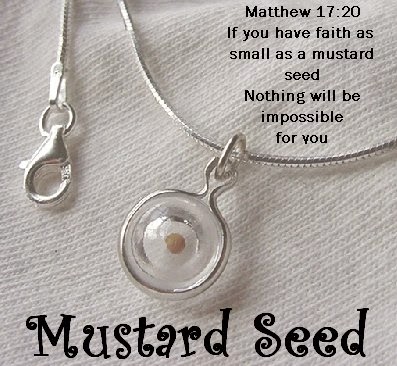
I was intrigued by the part of the chapter where the disciples couldn't drive out a demon because of their lack of faith. And I have always wondered how the twelve disciples could possibly have had a weak faith. These men were with Jesus! They saw him perform miracle after miracle and teach with authority. Yet Jesus basically tells them they don't even have a mustard seed of faith. Why? After reading this today, I ask myself, "Dan, why do you have so little faith?" My excuses are many: I haven't seen Jesus with my own eyes, I don't know theologically if God still does miracles in the same way still, I don't know if it's God's will. But the real answer that I was convicted by today is this: I lack the faith that the disciples lacked because I know myself, with all my flaws and failures. I have a harder time than anyone believing that I could do something like driving out demons. Yet this also reveals a great flaw in my thinking, namely because this kind of act has NOTHING to do with me and everything to do with God and God's power. Lord, help me trust in your power to do your work.

4. What questions do I have about this chapter?

I cannot say that I have encountered someone possessed by a demon. But how do I know? The demon in chapter 17 caused seizures and brought harm to the boy it possessed. How can we tell the difference between demons and epilepsy? Or demons and muteness, deafness, and blindness? It seemed like the people in Jesus's day just knew, like it was obvious that this person had a demon.

In Christ,
Dan