Greeting

Welcome to Dan's Daily Dig, a personal journey to dig into the Bible one chapter a day and grow spiritually. The goal is to read and reflect on each chapter using the following four questions:

1. What stood out to me from this chapter?
2. How does this relate to any other Scripture I know?
3. What does this mean for my life?
4. What questions do I have about this passage?

This blog is intended to provide both accountability for me to keep pressing on in this quest, and an invitation for any reader to join me any day or everyday. Simply read the selected chapter (it only takes about 5 minutes), and then respond using any or all of the four questions. It's supposed to be simple, but I hope to learn from others as well. I plan to share the blog as well on my twitter feed daily, so follow @DanBoji if you want to get the alert to the blog's posting. You can also subscribe by e-mail or another RSS feed on the right side of the screen. God's blessings.

In Christ,
Dan
Showing posts with label Gospel. Show all posts

Friday, May 15, 2015

#2Corinthians2 - Jesus Scented AXE!

Click here to read 2 Corinthians 2:

1. What stood out to me from this chapter?

Have you ever been around someone, or a group of people, and for better or for worse you detect that someone has put on a touch too much cologne or perfume? If you hang around with groups of middle school boys at camp, I guarantee at some point you'll get a whiff of a whole cabin group that decided to go crazy with AXE body spray. Although I don't appreciate the nature of AXE body spray advertising, the point is that a pleasing aroma will attract people and alert them to your presence. Paul is describing being a Christian in a similar fashion - not first of all that we should live to please people, but rather that we are first to God a pleasing aroma. Our lives should first of all be pleasing to God. When we live with integrity, compassion, authenticity, and love pouring out of us - coupled with the gospel message of Jesus - it is an attractive thing for others to want to be a part of it. The opposite would be saying that we believe in Jesus and the Bible, and then living a life that does not align with the standards God has set for life.

2. How does this relate to any other Scripture I know?

Paul talks about forgiveness for someone who has done wrong, or somehow caused distress in the church in verses 5-11. He says that whatever discipline or punishment was decided upon for that person, it is enough. The church should not keep pouring salt in a wound, so to speak. We are also called to forgive. Why? Because forgiveness is a necessary step toward reconciliation and restoration. If God just kept heaping guilt on us, we would never be able to stand before him or anyone. Rather he lets us feel the guilt of sin, then offers forgiveness through confession and repentance so that we can be restored and keep moving forward. Paul's language here reminds me of Jesus teaching in Matthew 6 in the Lord's Prayer and shortly after, about how our forgiveness for others should reflect God's forgiveness for us. He also tells the disciples in John 20:23, "If you forgive anyone's sins, their sins are forgiven; if you do not forgive them, they are not forgiven." It sounds like what Paul is telling the church.

3. What does this mean for my life?

I help lead a Christian ministry where we invest in thousands of guests and hundreds of young adult leaders each year. As a leader of the staff, this passage helped me consider when is the time of punishment or discipline, and when is the time for forgiveness. I think if I feel like someone has really felt the weight of their mistake and is truly sorry, then it's time for forgiveness. If they are continuing in a pattern of wrong behavior or attitude, then there needs to be corrective action. The goal is not control, but growth.

4. What questions do I have about this passage?

In verses 16, Paul adds, "To the one we are an aroma that brings death; to the other, an aroma that brings life." At first I wondered how Jesus could "smell" like life and death. But I think for some who are humbled and hungry for the love and forgiveness God has to offer through Christ, it is the hope and life they have been hoping for. For those who are hard-hearted and unwilling to repent, the gospel of Jesus is a message of condemnation and judgement, just like in John 3:16-18. Is this the right way to look at this verse?

Those are my thoughts for this chapter. I'd love to hear yours. God's blessings to you and KEEP DIGGING IN!

In Christ,
Dan

image from http://images.askmen.com/fashion/grooming/1255710220_axe-essence-body-spray_1.jpg

Friday, May 8, 2015

#1Corinthians7-9 - Running for the Prize

Click here to read 1 Corinthians 7-9:


After a busy weekend I am playing catch-up, so there will be at least one more post with multiple chapters. It's nice that it's easy to catch up and stay on track with this format.

1. What stood out to me from this chapter?

Chapters 7 and 8 of Paul's first letter to the Corinthians address some specific questions the church had for him after he had left their company. Although we don't even know the exact questions, we can guess pretty closely by his answers that they had to do with sexual immorality and how it relates to marriage, circumcision versus uncircumcision, and eating food that was sacrificed to idols. Interestingly enough, these would not have been questions for Jews under the old covenant law of Moses. It was clear: DON'T DO THOSE THINGS! But Paul is saying a few things in these chapters. Jesus came to fulfill the law of Moses and the old covenant because we couldn't. In doing so he also brought about the new covenant, which didn't totally do away with the law. Rather we are now freed from the demands of the law, so that eating food sacrificed to idols is now nothing, and circumcision and uncircumcision mean nothing. The important thing is that we are preaching the gospel of Jesus and putting as few stumbling blocks in the way of our brothers and sisters as possible. Paul compares this to a race and says that we should "run in such a way to win the prize."

2. How does this relate to any other Scripture I know?

In Jesus' famous "Sermon on the Mount" which is found in Matthew 5-7, we hear something very familiar concerning the law and the new covenant. Jesus says, "Do not think that I have come to abolish the Law or the Prophets; I have not come to abolish them but to fulfill them." (Matthew 5:17) He is essentially telling us that we are no longer bound by the old law, although the law is still there to guide us. Throughout the new testament we see passages that help us see in many ways which parts of the old testament laws are not important anymore. Colossians 2, for example, lists several examples of the kinds of laws that no longer bind us - circumcision, rules regarding eating and drinking, rules regarding specific religious festivals or Sabbath days (think of Jesus healing on the Sabbath), and rules about what is okay to touch (ceremonial uncleanness). From Hebrews we read that the old covenant system of priests and sacrifices were basically fulfilled and no longer binding, since Jesus is our eternal high priest and our perfect sacrifice. However, that doesn't mean that all old testament laws don't still have authority over us. Many of the laws were more about morality and God's design for life, including worship of God alone, sexual purity in marriage between man and woman, stealing, murder, lying, envy, etc. These laws are all re-emphasized in the new testament by Jesus, Paul, and others as being important guidelines that are forever in place by God.

3. What does this mean for my life?

I was personally moved by Paul's desire to share the gospel to all people. 1 Cor. 9:22-23 summed it up, "I have become all things to all people so that by all possible means I might save some. I do all this for the sake of the gospel, that I may share in its blessings." Paul relates to people, doesn't consider himself worth more than others, and find ways to make the gospel personally relevant to different audiences. His hopes is that some (many) would believe in Jesus and be saved. I especially noted how Paul used to word "all" three times to describe his efforts and then the word "some" to describe the response of his listeners. He knew not everyone would receive the gospel message of Jesus Christ, but he spent his entire life towards that goal regardless. I want that to be true of me too.

4. What questions do I have about this passage?

In two different sections of chapter 7, Paul advises people not to be married. He suggests it is better for most that they remain single, unless they can't control themselves sexually (then it's better to be married). What is he really saying and what are his motivations for saying it? Was he addressing this specific congregation and the issues of sexual immorality? Would he say the same thing today? It seems that part of it was a belief that Jesus would come back any day, literally, and that because time was so short we should all dedicate our energy 100% to the work of the gospel. However this presents a problem if every Christian remained single. As that generation died off, there would only be unbelievers left marrying and having kids. If he understood that it would be at least 2,000 years, would he have spoken differently?

Those are my thoughts for this chapter. I'd love to hear yours. God's blessings to you and KEEP DIGGING IN!

In Christ,
Dan

image from https://www.jrunnersclub.org/wp-content/uploads/2013/08/RunTrophy.jpg

Tuesday, April 28, 2015

#1Corinthians1 - Foolishness!

Click here to read 1 Corinthians 1:

Yesterday concluded my walk through the gospels. Since I have already done Acts, Romans, Galatians, Ephesians, Philippians, and Colossians, my plan is to read 1 and 2 Corinthians, then pick up in 1 Thessalonians and read the rest of the way through the New Testament. That will take us into August sometime, when we will blow the dust off of the Old Testament and dig into the treasures God has for us there. :)

1. What stood out to me from this chapter?

"For the message of the cross is foolishness to those who are perishing, but to us who are being saved it is the power of God." It's interesting to me that the message of the cross would be seen as foolishness to anyone. To me it seems like a heroic rescue or a love story, but when I think about it, almost every good thing in this world comes from the reward of good, hard work and positive performance. We work hard in school, and we get good grades and scholarships. We perform well in sports or music and we receive awards, honors, and opportunities for advancement. We work hard and perform well in work, and we receive a promotion or a raise. However the gospel message is not about rewards for hard work, it is about trusting in the perfect work and person of Jesus Christ to forgive our sins, restore our relationship with our heavenly Father, and fill us with the Holy Spirit. From the world's perspective, that just doesn't make sense.

2. How does this relate to any other Scripture I know?

Verse 25 reminds me a lot of Isaiah 55:8-11, which says, "As the heavens are higher than the earth, so are my ways higher than your ways and my thoughts than your thoughts..." Even God's foolishness is wiser than our wisdom. So what seems foolish to the world might just be the wisdom and plan of God.

3. What does this mean for my life?

Paul encouraged the people in Corinth not to claim any person as the one they follow except Christ. It was clear that whether they were taught primarily by Paul, Apollos, Peter, or another apostle, that they should still be unified and proclaim to follow Christ. I have experienced lots of different teachings from different people, and while I agreed with some more than others, I appreciated having that variety. Overall it has strengthened my faith and helped me. But as long as Christ is proclaimed, we should see how we can be more unified in the other things.

4. What questions do I have about this passage?

This isn't really a question, but I'd like to know more about Apollos. The first book I read through doing this chapter a day was Acts, and I know that it explains a bit about him in Acts 18, but what exactly was he preaching, and what happened to him after this?

Those are my thoughts for this chapter. I'd love to hear yours. God's blessings to you and KEEP DIGGING IN!

In Christ,
Dan

image from http://www.globalmensgroup.com/wp-content/uploads/2012/04/Clown-shoes-foolishness-of-the-cross.jpg

Thursday, April 9, 2015

#John3 - There's a reason...

Click here to read John 3:

1. What stood out to me from this chapter?

There is a reason John 3:16 is one of the most well known (and often displayed) verses from the Bible. Going into the reading of this chapter, I knew that John 3:16 was coming. I know it. I've heard it. I have it memorized, like many Christians and non-Christians alike. I tried to move past it, but it really is the center of the chapter. Not just verse 16, but the few verses immediately following it as well. In fact, verse 17 expounds on the first part of 16, and verse 18 clarifies the second part. Jesus came not to bring judgment (this time) but salvation. Hence his mission and resolve to die on the cross for our sins. But verse 18 makes it clear that that salvation is offered to all who believe. For those who do not believe, there is condemnation. This is clarified at the end of the chapter in verse 36, "Whoever believes in the Son has eternal life, but whoever rejects the Son will not see life, for God's wrath remains on them." John 3:16 says in one verse what all of Scripture is set up to explain. There's a reason we see it so much. If someone were just being introduced to Christianity, this is a great start. So I really admire people that bring the signs to games like this, although I would hope the sign holders would use some discretion and not totally block the view of the people around them for very long. That would be annoying, and could have a reverse effect of winning people to Jesus. :)

2. How does this relate to any other Scripture I know?

This made me think of other places in Scripture that really share the gospel clearly in one or two sentences. Here are a couple others I can think of that are similar:

Acts 4:12 - Salvation is found in no one else, for there is no other name under heaven given to mankind by which we must be saved.”

Romans 6:23 - For the wages of sin is death, but the gift of God is eternal life in[a] Christ Jesus our Lord.

Ephesians 2:8-9 - For it is by grace you have been saved, through faith—and this is not from yourselves, it is the gift of God— not by works, so that no one can boast.

1 John 1:8-9 - If we claim to be without sin, we deceive ourselves and the truth is not in us. If we confess our sins, he is faithful and just and will forgive us our sins and purify us from all unrighteousness.

1 John 5:12 - Whoever has the Son has life; whoever does not have the Son of God does not have life.

3. What does this mean for my life?

I don't think I could share about this chapter and not mention one of my favorite verses from Scripture that really shaped my life and ministry. Obviously we look to Jesus as an example for life, but it's depressing comparing ourselves to Jesus all the time. So I really like looking at other people in the Bible, and John the Baptist is one of my favorites. In John 3:22-30, John the Baptist is confronted by someone who is basically saying, "Hey John, this Jesus fellow, the one you were talking about - He's baptizing now too. And teaching. And performing miracles. People are flocking to him. Aren't you worried? or upset? or jealous?" His reply was something like this, "Are you kidding? My whole life's purpose is to point people to Jesus. Now that he's here in the flesh, I couldn't be happier that people are going to him. In fact, if things are going right, he will rise up and I will fade away. Glory be to God!" I love that. I want my life to be like that. If nobody remembers my name, and nobody remembers my love for pizza, and nobody remembers my weird fingers, but people are drawn to Jesus because of my life, I will die in peace. (I can live in peace with that too).

4. What questions do I have about this passage?

When Nicodemus, a Pharisee and council member, came to Jesus initially, he said, "Rabbi, we know that you are a teacher who has come from God..." If they knew that, why didn't they all listen to him and believe in him?

Those are my thoughts for this chapter. I'd love to hear yours. God's blessings to you and KEEP DIGGING IN!

In Christ,
Dan

image from http://image.minyanville.com/assets/FCK_Jan2011/Image/justin/john316sign.jpg

Thursday, February 12, 2015

#Mark1 - Mark's Action-Packed Gospel

Click here to read Mark 1:

1. What stood out to me from this chapter?

Many scholars agree that the gospel of Mark is almost certainly the first of the gospels to be written. Even looking at the type of Greek language used to write it (not the formal educated Greek, but the common street language Greek), Mark was mostly written for an audience of the ordinary citizens. It's the shortest of all the gospels, with only 16 chapters, but it's not for lack of content. I was struck by how quickly he moves from story to story. He doesn't spend a lot of time on dialogue. He doesn't spend any time talking about the birth story of Jesus. He just wants to get out the news about all that Jesus did during his adult ministry, ending with his death and resurrection. It's kind of like the Twitter version of the gospel. #JesusPreachesCallsTeachesExorcisesHealsPrays

2. How does this passage relate to any other Scripture I know?

Because Mark was likely the first gospel written, scholars believe that Matthew and Luke were also written using Mark as a template. They simply added their own perspective and some other details that Mark left out. So it follows that most of the stories in Mark will be very similar to reading through those other two gospels. Outside of the other gospels however, one of the verses stood out to me, Mark 1:34 said that Jesus would not let the demons speak because they knew who he was. This reminds me of James 2:19 which says, "You believe that there is one God. Good! Even the demons believe that - and shudder." It gives us some insights about the spiritual world. The demons all knew and believed that Jesus was the Son of God, the Holy One. It's funny that humans had (and still have) such a hard time seeing and believing that.

3. What does this mean for my life?

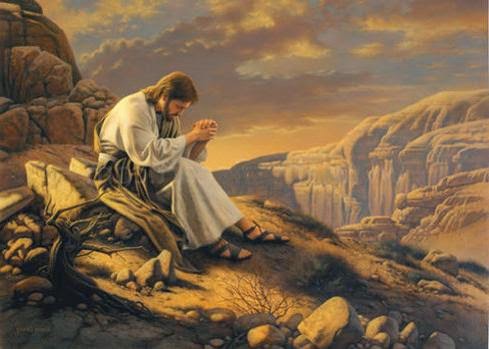
Jesus was the Son of God, but he was fully human. In fact, I believe that Jesus's miracles didn't necessarily come from his own "power" but from the Holy Spirit which filled him. I also believe that Jesus knew God's will so perfectly not just because he was a part of the Trinity, but because he was constantly seeking God in Scripture and in prayer. Mark 1:35-39 reminds us that even Jesus snuck away from the crowds (and even from his disciples) to pray and seek God in solitude. I need to do that regularly. That's a part of what this blog is all about. Carving out 30ish minutes each day to seek God in his word and in prayer and find out what he wants for me and from me.

4. What questions do I have about this chapter?

I understand there was a little bit of a mystery and plan to the time when Jesus was fully revealed as the Son of God, but why was he so intent on telling everyone to be quiet about who he was and what he had done? He quiets the demons before they can "spill the beans" about his identity. He tells the healed leper not to tell anyone. Why?

Those are my thoughts for the day! I'd love to hear yours. God bless and keep digging in!

In Christ,
Dan

image from http://www.trinityhavertown.org/wp-content/uploads/2010/05/jesus-praying.jpg

Wednesday, December 24, 2014

#Colossians3 #Colossians4 - A Map Through A Minefield

Colossians 3-4:

1. What stood out to you from this chapter?

This chapter contains quite a few of the "do's" and "don'ts" we are to practice (or avoid) in living life as a Christian. Too often people treat Christianity like it is basically a guide for morality, a list of rules that we must follow. If we do enough of the "do's" and avoid enough of the "don'ts" we'll be qualified to go to heaven. This is not the picture of Christianity the Bible gives us. God says we are "qualified for heaven" not by what we do, but by faith in Jesus Christ who alone is uniquely qualified for heaven. So these kinds of lists aren't a road map to get to heaven, but rather a map through a minefield of life. If someone offered you a map to get through a live minefield, you wouldn't consider that oppressive or judgmental. You would be grateful. That's how I feel about Colossians 3 and 4. If we avoid the things that God tells us to avoid (anger, rage, slander, filthy language, etc.) and practice the things God tells us to do (patience, kindness, humility, forgiveness, etc.) we will be able to navigate life with joy and peace rather than destruction and brokenness. For this, I am truly thankful.

2. How does this passage relate to any other Scripture I know?

In Colossians 4:2-6, it talks about proclaiming the gospel often and clearly. In this short section, Paul says that our conversation should be full of grace and seasoned with salt, so that we may know how to answer everyone. This reminded me of Jesus when he said, "You are the salt of the earth," in Matthew 5:13. I didn't really think about what that means exactly, until I read this passage in Colossians. When I think of something that is seasoned with salt, I think of something that is plain that becomes delicious. When we share the gospel, we should make it also interesting and enticing, BECAUSE IT IS!

3. So what does this mean for my life?

Verses 1-4 of chapter 3 gave me a new challenge for my life. We are to set our mind on things above, not on earthly things. It is very hard to keep a heavenly perspective in some circumstances, but this is a good reminder that God is always in control (even when it really doesn't seem like it). I think of some people like Joseph who was betrayed by his brothers, beaten, sold into slavery, falsely imprisoned and mistreated. He still kept his mind set on things above. This was clear when his brothers came to him and he received them back. He said, "You intended this for evil, but God meant it for good." It's easier to say that looking back on circumstances, but I want to try and keep this in mind in the middle of them.

4. What questions do I have about this passage?

At the end of chapter 4 there are some personal greetings. In verse 16, Paul says that this letter should also be read in Laodicea and that he had also written a letter to the church in Laodicea. I wonder what the letter to the Laodiceans was. Is there a copy of that anywhere? Why didn't that one get in the Bible?

That's it for today. I'm taking a break for Christmas. Have a merry Christmas.

In Christ,
Dan

Thursday, December 11, 2014

#Ephesians 1 - Deja Vu All Over Again

Ephesians 1:

1. What stood out to me from this chapter?

This famous quote by the great baseball player Yogi Berra seems like the appropriate title for this blog. Have you ever been to two church services in the same weekend, and heard the pastor preach the same sermon twice? Or have you ever worked at a camp where someone has given the same message or share to a different group or audience? Have you ever re-read a book because a new group you're in wants to do a book study that you've already done, or you just want to remember it better before the movie comes out? That's how I felt when I started reading Ephesians. I know I've read it all the way through, but that was awhile ago. I'm talking about having just finished Galatians, I feel like I'm hearing some very similar thoughts. But they are worded a little differently, have a slightly different tone, and shed a little new insight into the same concepts (if I'm willing to pay attention and listen.) One of the main ideas that was repeated from Galatians is the idea of adoption into God's family and becoming heirs of the kingdom. Also, a very clear message from the beginning of Ephesians is that this promise of eternal life is by faith in Christ: "the first to put our hope in Christ" (v. 12), "When you believed you were marked..." (v.13), "your faith in the Lord Jesus" (v.15), "great power for us who believe" (v.19). This also is very reminiscent of Galatians...and Romans...and Acts...and the rest of Scripture. It's almost like it's a big deal. :)

2. How does this passage relate to any other Scripture I know?

Besides the connections I just made to the previous books we went through, I really was struck by Paul's personal commitment to praying and giving thanks. This reminded me of 1 Thessalonians 5:16-18. "Be joyful always, pray continually, and give thanks in all circumstances, for this is God's will for you in Christ Jesus." Paul really practiced what he preached.

3. So what does this mean for my life?

In verses 17-18, Paul is praying a very heartfelt prayer that his "spiritual children" would grow up to know God more. I am first of all convicted to pray this same thing for my children continually. I am probably even more convicted to pray that for myself. As a teacher of the Bible, as a parent, as a ministry leader, it's really easy to just teach out of what you've learned and be content with that for a long time. But I really need to keep growing, keep seeking, keep opening my heart to what God has for me, and keep trusting in His power to sustain me.

4. What questions do I have about this passage?

Because this passage contains some of the strongest "predestination language" in the Bible, I want to ask the following question. I understand that someone who is adopted does not "choose" their adopted family without the family first initiating, but as I read Scripture it seems like EVERYONE has the opportunity to repent and turn to faith in Jesus Christ and receive eternal life. So here is my question: "What, if any, are the problems with the following statement? God chooses those who respond to the gospel by faith in Jesus." See also some similar questions from my blog on Romans 9.

That's Ephesians 1. We're gonna go through Ephesians, Philippians and Colossians by Christmas Eve! Join me for Paul's sermons through Christmas. :)

In Christ,
Dan

Tuesday, December 9, 2014

#Galatians3 #Galatians4 - Helpful Analogies Galore

Galatians 3-4:

**Just a quick note, I did miss two days of my reading/blogging, but I want to stay on track. So I chose to do 3-4 together today and 5-6 together tomorrow. As you may notice, chapter 4 begins in the middle of a thought process, so these two naturally flow into each other.

1. What stuck out to me from these chapters?

I noticed right away how many different analogies Paul uses to explain the gospel message. In the last chapter he very clearly stated that we are saved through faith and not by works. Now to help us understand what happens he uses all kinds of analogies, many of which are still relevant and helpful to us today. Here are just a few:


  • Cursed vs. Blessed (curse removed by Christ on the cross) - 3:10-14
  • Covenant and Promise - 3:15-22
  • Prisoner vs. Freedom - 3:22
  • Custody/Guardianship vs. Adoption/Sonship - 3:23-4:7
  • Slave vs. Heir - 4:1-7
  • Hagar/Flesh vs. Sarah/Promise - 4:21-31
All of these help me understand my sin and need for a Savior, God's grace in choosing me, my identity in Christ, and more. I'm a visual learner, and analogies (while they all fall short at some point) are very helpful for me.

2. How does this passage relate to any other Scripture I know?

There are several things that stood out to me as I made connections with other Scripture. The first is an obvious one as Paul directly references the Hagar and Sarah story. If this section didn't make sense, the original story can be found all the way at the beginning of the Bible in Genesis 16 (and some of the surrounding chapters). 

Another one that really caught my attention was Galatians 4:4-6. This is one of the clearest references to the Trinity (God the Father, God the Son, and God the Holy Spirit) in the Bible. Nowhere in the Bible does it mention the word "Trinity". It's a teaching in Christianity, however, that is both mysterious and yet foundational bedrock to understand God's character and his work in the world. These verses contain very clear references to God, "the Son", and the "Spirit of his Son" all very distinctively. Other references are Jesus' baptism (Matt. 3, Mark 1, Luke 3), the great commission (Matthew 28:18-20), and Jesus teaching and prayer in John 14-17. There are other places as well that mention each of the Triune members of God separately, but these verses really pull them all together.

3. So what does this mean for my life? 

In 4:8-20, Paul shares some really valid concerns with the Galatians. He's coming back to what he first referenced in Chapter 1, with the father's heart. He reminded the Galatians of their time together, and how close they had become with mutual affection for each other. He's crying out to them as they turn back to their former ways to keep in step with the gospel and the Spirit of God. It would be easy for me to put myself in Paul's position and think of who I need to cry out to that they would turn back to God's truth. But I am humbled as I consider that fact that I first need to discern in my life where I need to turn back to God's grace and truth. It's easy to put ourselves in the hero's role, but first we must put ourselves in the role of the one who is saved, corrected, rebuked and recognize that Jesus is the one who rescues us.

4. What questions do I have about this passage?

What, if anything, gets lost in Galatians 3:23-4:7 when we push for translations that are "politically correct?" Here's what I mean. It is clear from verse 3:28 that neither race, nor social class, nor gender keep anyone from the promise of God which is given to anyone who believes. But using the word "child" or "daughter" instead of "son" may lose some of the meaning of what Paul was actually getting at. If I'm not mistaken, in those days, SONS were the heirs who would receive the inheritance of the FATHER. Daughters, on the other hand, were not typically given the inheritance, but would be provided for through marriage. I'm not saying that's how it should be today, but if Paul would have said, "You are now sons and daughters of God," it may have different connotations. Would the daughters receive an inheritance? But since in the original language, Paul consistently uses the masculine word "son" (even though he knows this letter will be heard by women) he is actually ELEVATING women to the status of full heirs in Christ. I always hesitate, and even get a little turned off when "new" translations or editions are done solely for the purpose of "political correctness" because of situations like these. 

Monday, December 8, 2014

#Galatians2 - Gospel Explained

Galatians 2: 

1. What stood out to me from this chapter?

After reading chapter 1, I was left with the question of if/how Paul would actually explain the gospel message to the Galatians in this book. Chapter 2 gives a direct answer to my question, especially the second half of the chapter (verses 11-21). Paul is citing an instance when Peter started behaving as though salvation and justification was through works. But Paul clearly states in verses 15-16 that people are "not justified by the works of the law, but by faith in Jesus Christ. So we too have put our faith in Christ Jesus...because by the works of the law, no one will be justified." In "normal people language" that seems to say to me that nobody will ever earn their way to righteousness, or eternal life, or heaven. Rather we gain entrance to eternal life in Christ by putting our faith in what he did.

2. How does this passage relate to any other Scripture I know?

This passage in Galatians is very similar to verses that I hear quoted more often from Ephesians 2:8-9. "For it is by grace you have been saved, through faith - and this is not from yourselves, it is the gift of God - not by works, so that no one can boast." In fact, Galatians 2:20-21 also remind me of Ephesians 2: 1-4 about being dead in our sins and being alive in Christ. Romans 6:3-4 has almost the identical language and thought process as well. It seems that Paul really wanted to get this through to all the churches. It must be a big deal. :)

3. So what does this mean for my life?

I was personally caught off guard by verses 20-21. I am adamant that we are saved by grace through faith, as the earlier verses state clearly. But I often forget that we are supposed to LIVE by faith as well. Sometimes I think, "I'm saved by faith in Christ, but now I've got to measure up, to earn God's favor and his approval." While it is good to seek God's praise over human praise, sometimes this thought process can lead to a longing for God's validation to come because of our works. Here's what this chapter reminded me of: God's validation of us is just as much a gift as his salvation to us. He loved us before we ever started living for him. He thought we were worth dying for when we were still sinners. To live by faith truly is to trust that God has already given us his love, our value, and his approval. Our life then flows out of that confidence.

4. What questions do I have about this passage?

When Paul used the phrase "sinful Gentiles," what was his tone? I sort of read that as if he would have put quotations around that in a very sarcastic sense, as if we weren't "sinful" as well. Also, what was his tone toward Peter, James, and John in this letter. It almost seems as if Paul is being a little sarcastic in the first part of the chapter too. Like when he says, "as for those who were held in high esteem - whatever they were makes no difference to me..." it almost seems as if he's saying, "For those so-called 'leaders', yeah right." Maybe I'm reading too much into it.

That's it. In case anyone is paying really close attention, I missed two days, but I will be covering both chapters 3-4 tomorrow and 5-6 on Wednesday to get back on track. God's blessings.

In Christ,
Dan

Friday, December 5, 2014

#Galatians1 - Your story and the gospel

Galatians 1: 

1. What stood out to me from this chapter?

Paul has some strong words about not turning to any other gospel message. At first it might be easy to think that he is some self-absorbed spiritual nazi yelling at people that he's right and nobody else is. But then I remembered that Galatians is actually a letter written by Paul to a church that he basically started and spent a lot of time with. He is like a spiritual father to these people, and they are like his children. He's speaking to them with a loving heart, warning them about people who would try to deceive them. That really makes his tone seem not arrogant but concerned and important. 

2. How does this passage relate to any other Scripture I know?

Paul talks a lot about his personal conversion and calling experience in this chapter. Having just read the book of Acts, this story (found in Acts chapter 9) is fresh in my mind and sheds more light on what he is talking about here. Paul also talks about his call has an act of God's grace in 1 Timothy 1:12-17. 

3. So what does this mean for my life? 

We just finished our fall recharges which had the theme verse of Psalm 107:2. It says, "Let the redeemed of the Lord tell their story." I was intrigued by Paul's use of his personal testimony in this chapter and noted a few things that encouraged me to share mine more. First, Paul's testimony was not overly long or full of unnecessary details. He shared what was  most relevant for the purpose of his letter. Second, his personal testimony took the message he was sharing from a level of academic debate to a personal, genuine, level. I have to remember that personal stories of faith help people to see how God is really at work in my life. 

4. What questions do I have about this passage?

My question is really simple, "When is Paul going to share what the gospel is?" He is adamant about not deserting it, but I'm looking forward to hearing him outline it. 

That's it. I'm planning on going through Galatians, Ephesians, Philippians, and Colossians, which will end on Christmas Eve. Join me and feel free to leave your own comments. 

In Christ,
Dan

Friday, November 21, 2014

#Romans6 - Wanted: Dead AND Alive

Romans 6: 

1. What stuck out to you from this chapter?

There are two very strong images Paul uses in this chapter to describe a Christian's life. The first is life and death. Baptism is a symbol of how we have died to sin. The sinful nature in us is not our source of life anymore. Instead, just as Christ was raised from the dead, we too have been raised to a new life that the Holy Spirit empowers us to live. I think that immersion baptism really illustrates this perfectly, in that when the person goes under the water they are "drowning" the old, sinful self. When they come back up they are rising up to live a holy life, having had their sins washed away.

The second image is one of slavery. We are all in bondage to sin and cannot free ourselves. Naturally we let our master be our own desires. Whatever we want and whatever pleases us - that is our master. That master is sin. However when we are made new, washed clean, and born again into the new life, we offer ourselves as slaves to righteousness.

2. How does this passage relate to any other Scripture I know?

Well the language of death and life is used in other key passages as well. Galatians 2:20 says, "I have been crucified with Christ. I no longer live, but Christ lives in me." Colossians 3:5 commands us to "Put to death...whatever belongs to your earthly nature..." and then lists a whole bunch of destructive and sinful behaviors. This is obviously a pretty serious warning to not even let those desires and behaviors get even the smallest foothold in our lives.

3. So what does this mean for my life?

First, there is a verse in this chapter that every Christian should memorize. Romans 6:23 says, "For the wages of sin is death, but the gift of God is eternal life in Christ Jesus our Lord." It's a powerful verse, similar to John 3:16, that shares the whole gospel in one verse. I need to have this in my "hip pocket" to help me be ready.

Secondly, there's the very personal and practical commands to offer the parts of our body for righteousness. I need to make sure my hands are engaged in Godly work, my words are building others up, and my whole body is not engaging in immoral behaviors.

4. What questions do I have about this passage?

Because Paul talks about Baptism in this passage, I would like to know, "What would Paul say about Baptism today? Would he take a side in the "believers baptism" vs. "infant baptism" debate? Would he favor young or old to be baptized? Would he tolerate our practices and teachings about it? It would be cool and crazy to have him here today explaining all he meant.

In Christ,
Dan

Tuesday, November 18, 2014

#Romans3 - Best Gospel Explanation

Romans 3: 

1. What stuck out to you from this chapter?

In my opinion, verses 19-26 hold one of the most concise, clear, compelling explanation of God's plan of salvation, the gospel of Jesus Christ. It begins with knowing that we will all be held accountable to God someday, and that we will all be found guilty. In fact, verse 20 says that the law actually guides us to realize our sinfulness. This passage basically says there are two ways to be found righteous - 1. By being perfect according to the law (which nobody except Jesus is able to do), and 2. By putting our faith in Jesus Christ and believing in him. It declares redemption and atonement through Christ, to be received by faith. It describes God as a just judge, and as the merciful provider for our penalty through Christ. I think this is a passage every Christian should read thoroughly to understand that we are not justified by works, that we are never found righteous through doing enough good things, that we will never earn our way to heaven. Rather we are forgiven of our sins and given eternal life through faith in Jesus Christ, no matter what our background is.

2. How does this passage relate to any other Scripture I know?

Ephesians 2 has another similar explanation of the gospel, clarifying that "it is by grace you have been saved, through faith...not by works, so that no one can boast." Galatians 2 also contains a passage very similar, especially in emphasizing that Jews and Gentiles are both justified by faith in Jesus Christ.

3. So what does this mean for my life?

Passages like this don't necessary have direct action applications, but sometimes the application of Scripture is not just in right "doing" but in right "thinking." For me, this passage really has been instrumental in helping me to understand the basic gospel message. It has also been very helpful to share that message with others using Biblical truth rather than just my own "analogies". If ever there was a passage to memorize, this would be right up there in my book. It is so central to our own faith, as well as being a powerful truth to equip us in sharing our faith with others.

4. What questions do I have about this passage?

The first 8 verses are a little confusing. I think Paul is basically saying that the fact that our sin makes God's holiness even more obvious isn't an excuse to keep on sinning. My question is, "Is that a fair summarization? Am I missing something?"

In Christ,
Dan

Sunday, November 16, 2014

#Romans1 - Danger and Salvation

As I finished reading the book of Acts, I decided to go to the next book of the bible and continue my journey of reading a chapter a day. Romans is a letter, written by Paul to the believers in Rome. Rome is where Paul's journey ended in the book of Acts, and according to traditional understanding is also where his life ended. Romans is also one of the key books of the Bible that inspired Martin Luther some 500 years ago to post his 95 theses on the door of the Catholic church which ultimately inspired the Reformation and led to people reading the Bible for themselves. So I am very excited to dig in. HERE WE GO!


1. What stuck out to you from this chapter?

After his greetings and personal statements, Paul gets into some theological statements pretty quickly, but they aren't pretty at all. He begins with the wrath of God. It's a topic most people would just rather ignore, erase out of the Bible, or close their eyes and plug their ears and hum a merry tune while it's being read. We say God is loving, we say God is perfect, and we say God is holy. How can God be a loving, holy, perfect God and let the guilty go unpunished. I recently heard a sermon that rightly pointed out that if we are the ones who are wronged or hurt, we cry out to God for punishment and judgement. But when we are guilty, we like to just cling to the mercy and grace of God. So the fact that Paul starts out speaking about God's wrath makes me think we need to stop and realize that it's a big deal. There is a danger of living in our sin without repenting. God will not force us to change our destructive, disobedient behavior, but he will not let us "off the hook" forever. God's wrath is real and we need a way to escape it.

2. How does this passage relate to any other Scripture you know?

This chapter contains a list of behaviors God clearly calls sinful. At a retreat recently, I shared about these kinds of lists not as a overly-strict fun-hating God, but as a map through a mine field. Wouldn't you appreciate someone telling you where the mines were so you could avoid them and the destruction that comes with them? That's what God does in Scripture. This list includes behaviors and attitudes like not being thankful to God, worshipping idols, homosexual behavior, greed, envy, murder, gossip, arrogant, boastful, disobedient to parents, etc. There are other lists that are very similar in Scripture. Some are found in Galatians 5, Colossians 3, 1 Corinthians 6, and Ephesians 4. It would be really easy to think that these lists are for other people, the "really bad ones." But the truth is, I bet it would be rare for anyone to look at all of these lists and not find themselves having done some of these things. It just really reminds me that we need God.

3. What does this mean for my life?

In Romans 1:16, Paul says, "I am not ashamed of the gospel, because it is the power of God that brings salvation to everyone who believes..." I want to live my life unashamed of the gospel, not being afraid to share of God's love, God's judgment, God's mercy and grace in providing Jesus, and God's promise of eternal life to all who believe in Jesus. Ironically, this verse in Romans is the theme verse for the Recharge youth retreats at Ingham Okoboji Lutheran Bible Camps in the spring.

4. What questions do I have about this passage?

I have heard verses 18-20 used as a way of saying something like, "Everyone in the world sees creation and therefore is expected to worship God, or what they know of God through creation. Therefore everyone who does not believe in this way is guilty (people are without excuse)." My question is whether or not this is a valid approach to understanding this verse. My struggle is that I just don't think people would naturally make the leap from, "Wow, what a pretty sunset" to "I need to trust Jesus for the forgiveness of my sins and salvation of my soul right now." So I'm just not exactly sure how to take this part.

Hope you're able to join me in reading through Romans. Please feel free to leave a comment. It can be a response to any or all of the four questions, or to something I wrote. Either way I hope you read the chapter and use this to keep digging deeper into God's word.

In Christ,
Dan