Greeting

Welcome to Dan's Daily Dig, a personal journey to dig into the Bible one chapter a day and grow spiritually. The goal is to read and reflect on each chapter using the following four questions:

1. What stood out to me from this chapter?
2. How does this relate to any other Scripture I know?
3. What does this mean for my life?
4. What questions do I have about this passage?

This blog is intended to provide both accountability for me to keep pressing on in this quest, and an invitation for any reader to join me any day or everyday. Simply read the selected chapter (it only takes about 5 minutes), and then respond using any or all of the four questions. It's supposed to be simple, but I hope to learn from others as well. I plan to share the blog as well on my twitter feed daily, so follow @DanBoji if you want to get the alert to the blog's posting. You can also subscribe by e-mail or another RSS feed on the right side of the screen. God's blessings.

In Christ,
Dan
Showing posts with label authority. Show all posts

Tuesday, February 3, 2015

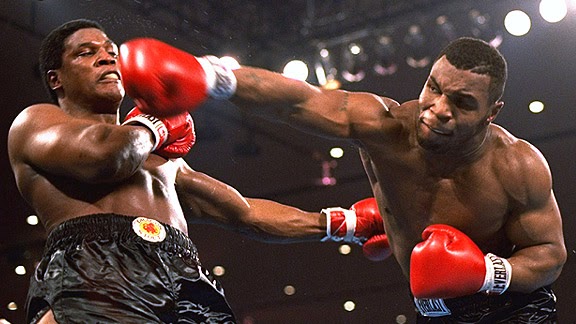
#Matthew22 - Three Round KO With Jesus

Click here to read Matthew 22:

1. What stood out to me from this chapter?

This whole chapter is sort of a standoff between the teachers of the law and Jesus. After Jesus shares the parable of the wedding banquet, there are three different groups of religious and civic leaders who come to Jesus trying to trap him in his words. Each time Jesus answers in such a way that the leaders are silenced. They can't argue or debate with him because he has actually not only answered the deeper meaning of the question, but in doing so pointed out their error and flaws of logic and heart. After the three questions, Jesus takes his turn to ask one. This question is kind of like a knock-out punch in a boxing match. In fact, the way Jesus answers their questions is not as much like a boxer trying to dodge or deflect, it's more like Neo in the first Matrix movie when he stops the bullets and sees the agents for what they truly are. Still, even though Jesus delivers a knock-out punch to their tricky questions, I don't think his intention was to shame and humiliate. I think it was to wake them up. He was very harsh with the religious leaders, but not to destroy them. Only to get through to their hard hearts that they too would have a chance to repent and be born again (just like Nicodemus, with whom Jesus spoke very gently).

2. How does this passage relate to any other Scripture I know?

Well the parable of the wedding banquet follows immediately after the parables from yesterdays reading in Matthew 21. They all share a similar message. The father asks one son to do a job and he doesn't do it. The landowner hires an initial group of people to manage the vineyard and give him dues. The king invites an initial group of people to the wedding banquet. In each scenario, I think Jesus is referring to the nation of Israel at large, specifically those who call themselves religious leaders. They rejected the prophets, actually neglected God at times, and ultimately killed the Son of God. Jesus is saying that God's patience doesn't last forever, and he is already alluding to the fact that God is now "allowing" Gentiles to become a part of the kingdom and family of God through faith in Christ. The Gentiles and "sinners" were always seen as outsiders of the blessings of God, but in each of these stories, Jesus is saying that those Gentiles and "sinners" who are hungry and eager to receive the blessings of God will be welcomed while those heart-hearted among the Jews will be cast out. Paul also teaches this way using the illustration of natural branches vs. grafted branches on a tree in Romans 11:11-24

3. What does this mean for my life?

I don't know if this was intended to be a Christian finance 101 class with the question of paying taxes, but Jesus' answer helps me to think through my personal finances. There is a pretty common question among Christians of whether we are supposed to give or "tithe" a percentage of our gross income (before taxes are taken out) or net income (what we take home after taxes have been taken out). The best answer is probably, "It doesn't really matter, as long as you give generously and joyfully." But this answer Jesus gives in Matthew 22:18-21 helps me think that really, we should give a percentage of our gross income. As long as we live under a government there will be taxes, and we should give to the government what they have allotted, and give to God what He has asked. Jesus doesn't say, "pay your taxes and then if there is any left over give it to God." Anyway, that's kind of a funny way of looking at it, but it helps me to be a little more generous in giving off of the gross.

4. What questions do I have about this passage?

I think I understand the big picture meaning of the wedding parable, as explored in question #2, but there is still a little piece that I don't really understand. When the servants go out and bring in everyone off the street, there is a man who is not wearing wedding garments. Even though he is called "friend" by the king, he is still tied up and thrown outside. I heard once that everyone attending would have been given garments, so he must have either rejected them or chosen not to wear them. Yet my question is still, "What significance does this have for us today? Or what meaning would have been implied to the listeners then?"

That's it. I'd love to hear your thoughts.

In Christ,
Dan


images from http://a.espncdn.com/photo/2008/1126/box_a_tyson_576.jpg and http://performinsider.com/wp-content/uploads/neo-bullets.jpg

Monday, February 2, 2015

#Matthew21 - The King They Most Needed but Nobody Wanted

Click here to read Matthew 21:

1. What stood out to you from this chapter?

EVERYTHING in this chapter points to Jesus as king. He is fulfilling the prophecy about Zion's King. He commands authority in the Temple. He teaches with authority. His parables and the explanations point to him as the coming Messiah, the Son of God. But this wasn't exactly the rise to the throne that people wanted. Sure they were shouting "Hosanna," which means both "Save us!" and "Salvation is here!" For a really cool quick lesson on the meaning and history of the word, Hosanna, click on this article by John Piper! The people are rightly shouting for salvation for the one who can bring it. But they are thinking of a different salvation. They wanted Jesus to march right up to the palace and lead a rebellion against the Roman government. They probably would have supported him too. But he didn't go to the palace. He went to the temple. And he wasn't teaching about the kingdom of Israel; he was teaching about the kingdom of God. He was the king they most needed but nobody wanted.

2. How does this passage relate to any other Scripture I know?

Well, on a downer note, I can't help but read this passage and think about what's coming next in the story of Holy Week (in Matthew 26 and 27 - we'll get there). Today, crowds are shouting hosannas to the Son of David. In five days they will be shouting "Crucify Him!" Today they are laying down their coats for him. In five days they will be stripping his clothes off of him and mocking him. Today they are waving palm branches in his honor, in five days they will be whipping him and putting a crown of thorns to dishonor him. Today he is at the height of his (earthly) glory, and in five days he will be buried in death.

3. What does this mean for my life?

This piece of the story about the fig tree really hit home for me today. Not too many chapters ago, Jesus said that even if we had faith the size of a mustard seed you can tell a mountain to move. Now Jesus again says, "If you believe, you will receive whatever you ask for in prayer." I'm just convicted because I think if Jesus were to stand in front of me today and look at me, he would lovingly look at me as he did the disciples and say, "Oh you of little faith." I feel much more like the man who asked Jesus to heal his boy who confessed, "I do believe; help me overcome my unbelief!" (Mark 9:24)

4. What questions do I have about this chapter?

I think I just have more of a rhetorical or almost disappointed question about this passage. Why were the teachers of the law so hard-hearted towards Jesus. They should have been the ones most eagerly awaiting the Messiah, most aware of the prophecies, and most ready to receive this king. But I sort of answered the question above in large part.

God's blessings. Keep Digging In!

In Christ,
Dan

image from https://s-media-cache-ak0.pinimg.com/originals/e4/47/dd/e447dd52706598362164baac4ae65a93.jpg

Tuesday, January 13, 2015

#Matthew7 - With Authority!

Click here to read Matthew 7:

1. What stood out to me from this chapter?

There are many brief teaching segments in this chapter, many of which compare and contrast truth and falsehood, wisdom and foolishness. But more than any specific teaching, what stood out to me was the last verses of the chapter. "When Jesus had finished saying these things, the crowds were amazed at his teaching, because he taught as one who had authority, and not as their teachers of the law." It's unfortunate that their religious leaders and teachers didn't have authority in their teaching. But as we find out from Jesus, many of them were over-religious, self-righteous, and hard-hearted. They were likely teaching in a way that made themselves look good and made others look unclean and dirty. Jesus came along and taught in a way that didn't diminish the law, but called people into a relationship with the Father through him.

2. How does this passage relate to any other Scripture I know?

Many people know Jeremiah 29:11, and quote it often, "For I know the plans I have for you..." However I don't know how many people know the context or the surrounding verses which are equally powerful. What came to my mind is actually Jeremiah 29:13-14, "You will seek me and find me when you seek me with all your heart. I will be found by you..." Jesus echoes this theme of God's by saying, "seek and you shall find...". It's like a game of hide and seek where a dad is playing with his young child. He's not going to hide in some ridiculously hard spot. He is going to be found by his kid, as long as his kid is seeking. God wants to be found by us, but he also wants us to seek.

3. What does this mean for my life?

There was a point in my life where the part about not judging others really hit hard. A close friend pulled me aside and let me know that in the way that I carried myself it came across like I thought I was better than others. I didn't really think that, but I realized that the way I spoke and acted really did come across like somehow I had figured out how to live righteously. I'll admit it's something I still have to check myself on. The remedy is easy, though. Remembering that I too, am a sinner saved by the grace of God, and apart from his mercy and forgiveness I'd be swallowed up in sin and wrath.

4. What questions do I have about this passage?

The narrow road and broad road metaphor has always been a tricky one for me. Is this passage about salvation and eternal life? If so, is the narrow road simply talking about faith in Christ? Or is this a passage about living the full abundant life God has for us? In that case Jesus would be saying something more like, "Many people, even Christians, are missing out on the blessings of life because they are taking the easy way or the world's way..."

We are back on track now with the blog, and should be going everyday from here on out. I'd love to hear any comments from readers.

In Christ,
Dan

image from http://www.warrencampdesign.com/photoEdit_composites8.html

Saturday, November 29, 2014

#Romans13 - Submit to Earthly Authorities

Romans 13: 

1. What stuck out to you from this chapter?

The chapter starts out on a note that I think many young people would find challenging. I think in part it's because of that difficult 6-letter word: "submit." Part of gaining independence is to "break free" from rules and those in authority: parents, teachers, city officials and officers, etc. But God's word here is especially striking if you look at the culture to which it was written. Many Jews, and later Christians, saw the Roman government as the enemy - even the Antichrist. Still, God encourages us to submit to the governing authorities, spelling out that God is the one who has allowed people and nations to be in power. So paying taxes, abiding by traffic rules, and following legal business practices are all ways to ultimately submit to God.

2. How does this relate to any other Scripture I know?

In verses 8-10, Paul talks about love as being the fulfillment of the law. Immediately, and probably obviously, I thought of Jesus' own teaching about love being the summary of the law in Matthew 22. The teachers of the law tried to trick Jesus once again (you'd think they'd get tired of being in the wrong) by asking him which of the commandments is the greatest. Whichever one Jesus picked they would find some fault in his answer. However, Jesus says that loving God and loving neighbors are the two greatest commandments and that all of the Law and the Prophets hang on these two commandments. (In a side note, Jesus also talks about paying taxes to Caesar earlier in the same chapter.) It's almost as if Paul was taking his cues from Jesus. :)

3. So what does this mean for my life?

I have always been a rules follower (almost to a fault), but I really connected with verse 3 about not fearing authorities if you do what is right. I think of speeding as an example. Whenever I pass a cop car, I never get worried. I never check in my rear view mirror for lights. It's because I am not speeding. On the other hand, for those who are speeding there is that moment of tense anxiety when they see a police officer on the road. So I'll keep doing that. :)

However, another thing that came to mind was that I don't believe this chapter is talking about blind obedience to every rule no matter what. In fact, the Bible has examples where Jews did not follow the ruling laws that were in direct contradiction to God's (i.e. Shadrach, Meshach, and Abednego, Daniel, etc.). I believe that we are able to and called to be a part of political process to protect our freedoms to worship. We are blessed to live in a country where we can speak up, vote, and contact our officials and government leaders in order to bring about justice and protect our freedoms and rights. So many people feel helpless to the government's "control," but refuse or neglect to participate in the processes which can affect change.

4. What questions do I have about this passage?

Two major questions really arise for me from this chapter. First, regarding the submission to authorities, when is it appropriate for Christians to directly disobey the law (i.e. other countries where it is illegal to be a Christian, own a Bible, share your faith, or assemble for worship)? I'm not talking about normal civil laws, but specific laws that prevent people around the world from obeying God's word.

The second question is about verses 11-12. The writers of the new testament all seemed to think the end of the world was near. Why did they think that? 2,000 years later, how do we take these verses? Is it referring to the order of events (i.e. the next event will be Jesus return) or time in years?

There are my thoughts and questions. I was actually surprised how much this little chapter prompted in me. I thought this would be a really quick blog entry, but there's some good stuff. I'd love to hear your thoughts or questions.

In Christ,
Dan